

Custom Restaurant Ordering System
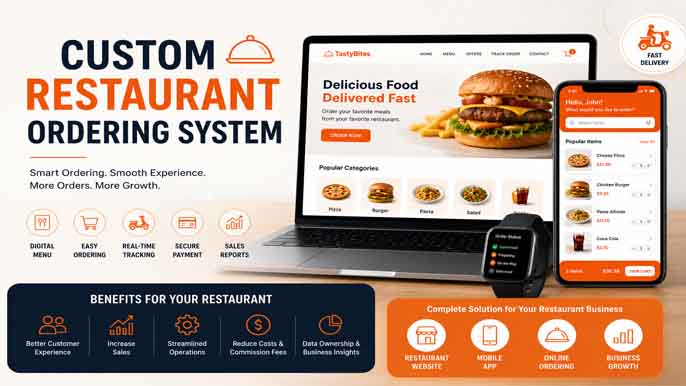
Custom Restaurant Ordering System
Introduction
The restaurant industry has experienced a significant digital transformation in recent years. Customers no longer rely only on phone calls or walk-in visits to place food orders. Instead, online ordering systems have become an essential part of modern restaurant operations. A Custom Restaurant Ordering System provides restaurants with a personalized platform that is designed according to their unique business requirements, helping them improve efficiency, customer satisfaction, and revenue.
In this article, we will explore what a custom restaurant ordering system is, its key features, and how it helps restaurants streamline operations while delivering an exceptional customer experience. Businesses investing in Online Food Ordering Website Development Services can create a reliable digital platform that supports long-term growth and customer loyalty.
What Is a Custom Restaurant Ordering System?
A custom restaurant ordering system is a software solution specifically designed to match the unique workflow, menu structure, and operational requirements of a restaurant. Unlike ready-made platforms that offer generic features, a custom solution provides complete flexibility in design, functionality, and customer experience.
Restaurant owners can customize every aspect of the system, ensuring that it perfectly aligns with their business model and branding strategy.
Why Restaurants Need a Custom Ordering System ?
Every restaurant operates differently, with unique menus, customer preferences, and business processes. A generic ordering platform cannot always meet these specific requirements.
A custom ordering system provides several important advantages:
- Supports unique menu structures.
- Matches specific business workflows.
- Provides complete branding control.
- Eliminates third-party commission fees.
- Gives full ownership of customer data.
- Offers scalability for future expansion.
These benefits make custom solutions a valuable long-term investment for restaurants looking to strengthen their online presence.
Online Menu Management
An efficient menu management system allows restaurant owners to update their menu without technical assistance. This flexibility helps businesses respond quickly to seasonal changes, promotions, and pricing updates.
Essential menu management features include:
- Category and subcategory management.
- Real-time price updates.
- Product availability control.
- Special offers and discount management.
- High-quality food images and descriptions.
User-Friendly Ordering Interface
The success of any online ordering platform depends on its ease of use. Customers expect a fast, simple, and intuitive ordering experience. A complicated interface often leads to abandoned orders.
An effective ordering interface includes:
- Well-organized menu categories.
- Easy item selection.
- Simple shopping cart management.
- Quick checkout process.
- Multiple payment options.
A smooth ordering experience increases customer satisfaction and encourages repeat purchases.
Order Customization Features
Modern customers expect personalized dining experiences. A custom ordering system should allow users to modify their orders according to their preferences.
Popular customization options include:
- Adding or removing ingredients.
- Selecting spice levels.
- Choosing portion sizes.
- Adding special cooking instructions.
- Customizing combo meals.
These personalization features improve customer satisfaction and strengthen brand loyalty.
Real-Time Order Tracking
Real-time order tracking has become a standard feature for modern restaurant ordering systems. Customers appreciate knowing exactly where their order is during every stage of preparation and delivery.
The advantages include:
- Greater transparency.
- Reduced customer uncertainty.
- Accurate delivery estimates.
- Higher customer trust.
This feature is especially valuable for restaurants that provide home delivery services.
Multiple Payment Gateway Integration
Customers prefer having multiple payment options during checkout. A professional ordering platform should support secure and flexible payment methods.
Common payment options include:
- Credit and debit cards.
- Digital wallets.
- Bank transfers.
- Cash on delivery.
- Mobile payment applications.
Offering multiple payment methods simplifies checkout and reduces cart abandonment.
Table Reservation and Dine-In Integration
Modern restaurant ordering systems are no longer limited to food delivery. They also support dine-in services by allowing customers to reserve tables, pre-order meals, scan QR codes for table ordering, and receive waiting-time updates.
This integration improves operational efficiency while enhancing the overall dining experience.
Admin Dashboard and Order Management
A professional restaurant ordering system includes a powerful administrative dashboard that allows restaurant staff to manage operations efficiently.
Important dashboard features include:
- Real-time order monitoring.
- Order status management.
- Sales and revenue reports.
- Customer database management.
- Inventory tracking.
Businesses using Restaurant Website Development Services often integrate advanced dashboards to simplify restaurant operations and improve workflow management.
Delivery Management System
Restaurants with their own delivery teams benefit from integrated delivery management features. The system can assign delivery drivers, optimize delivery routes, estimate delivery times, and track deliveries in real time.
This improves operational efficiency while ensuring timely deliveries and better customer service.
Loyalty Programs and Customer Retention
Modern ordering platforms include loyalty programs that encourage repeat purchases and strengthen customer relationships.
Popular loyalty features include:
- Reward points.
- Discount coupons.
- Referral programs.
- Birthday and anniversary offers.
These marketing features help increase customer retention and long-term profitability.
Mobile App Integration
Most customers now prefer ordering food through smartphones. Integrating Food Delivery Mobile App Development with a restaurant ordering system creates a faster, more convenient customer experience.
Mobile applications provide:
- Faster ordering.
- Push notifications for promotions.
- Location-based services.
- Improved user experience.
- Greater customer engagement.
A dedicated mobile app also strengthens brand recognition and customer loyalty.
Data Security and Customer Privacy
Restaurant ordering systems handle sensitive customer and payment information, making security a top priority.
Essential security measures include:
- SSL encryption.
- Secure payment processing.
- Privacy compliance.
- Regular security updates.
- Protected customer databases.
A secure platform builds customer confidence and encourages repeat business.
Analytics and Business Insights
Advanced analytics help restaurant owners understand customer behavior and improve business performance.
Analytics provide valuable insights such as:
- Best-selling menu items.
- Peak ordering hours.
- Customer purchasing patterns.
- Revenue trends.
These insights support smarter decision-making and long-term business growth.
Scalability and Future Growth
One of the biggest advantages of a custom restaurant ordering system is scalability. As the restaurant expands by opening new branches, adding menu items, or serving more customers, the system can easily be upgraded without major limitations.
Unlike many ready-made platforms, custom solutions are built with future growth in mind, making them a reliable long-term investment.
Conclusion
A Custom Restaurant Ordering System is no longer a luxury it has become an essential business solution for restaurants operating in today's competitive food industry. By integrating online ordering, menu management, payment processing, delivery management, customer engagement, and business analytics into one platform, restaurants can improve operational efficiency, enhance customer satisfaction, and achieve sustainable business growth.
Add a Comment
Categories
- Authentic Mughlai Restaurants 1
- Best Biryani in Pakistan 13
- Cafes for Coffee 6
- Desi Breakfast 2
- Dining Experiences & Lifestyle 6
- Family-Friendly Restaurants 5
- Food Culture & Community 6
- Food Trends & Tips 5
- Hidden Gem Restaurants 2
- Pakistan Restaurants 8
- Pakistani Cuisine 5
- Rooftop Restaurants 2
- Street Food In Karachi 1
- Top Restaurants in Lahore 7
- Vegan and Vegetarian 1
