

Restaurant Mobile App Development and Food Ordering Platform
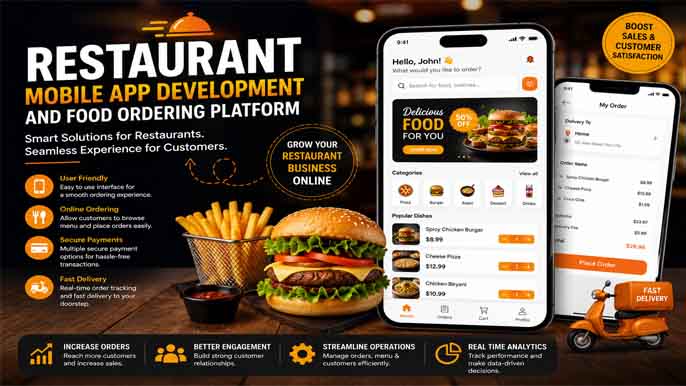
Restaurant Mobile App Development and Food Ordering Platform
Introduction
The restaurant industry has changed dramatically over the last decade due to the rapid growth of digital technology and changing customer behavior. Modern consumers prefer convenience, speed, and accessibility when ordering food, making mobile applications and online ordering systems essential for restaurant success. Businesses that fail to adapt to these changes often struggle to compete in a market where customers expect seamless digital experiences. This is why investing in a Restaurant Mobile App Development and Food Ordering Platform has become one of the most important decisions for restaurant owners who want to grow their business and improve customer satisfaction.
Mobile applications and food ordering platforms have transformed how restaurants connect with customers. Instead of relying solely on physical locations or phone calls, restaurants can now offer direct ordering, digital payments, delivery tracking, loyalty programs, and personalized experiences through dedicated applications. These technologies not only improve convenience for customers but also increase revenue opportunities for restaurant owners.
The Growing Demand for Digital Food Ordering Solutions
Consumer behavior has shifted significantly toward online ordering. Customers now prefer browsing menus, placing orders, and making payments through mobile devices because it saves time and offers flexibility. The increasing popularity of smartphones and internet accessibility has accelerated the adoption of digital ordering platforms across the world.
Restaurants that implement online ordering solutions benefit from improved efficiency and stronger customer engagement. Digital systems reduce order errors, automate processes, and allow businesses to manage larger volumes of customers more effectively.
Modern food ordering technology supports restaurants of all sizes, including local cafes, fast-food chains, cloud kitchens, and fine dining establishments. Businesses adopting Online Food Ordering System for Small Restaurants solutions can compete with larger competitors while maintaining lower operational costs.
Understanding Restaurant Mobile App Development
Restaurant mobile app development involves creating applications specifically designed to simplify customer interactions and restaurant operations. These applications allow customers to explore menus, customize orders, complete payments, and track deliveries within a single platform.
A professionally developed restaurant app acts as a direct communication channel between businesses and customers. Restaurants no longer depend entirely on third-party marketplaces because dedicated applications provide more control over customer relationships and branding.
Mobile applications also allow restaurants to collect valuable customer data. Insights into purchasing habits, favorite menu items, and ordering frequency help businesses improve marketing strategies and increase customer retention.
Essential Features of a Restaurant Mobile Application
A successful restaurant application must provide convenience, usability, and performance. Customers expect fast, intuitive experiences when interacting with food ordering platforms.
User-friendly interfaces improve navigation and reduce ordering complexity. Customers should easily browse categories, search menu items, and complete transactions without confusion.
Real-time order tracking has become one of the most requested features in food applications. Customers appreciate transparency because it provides accurate updates regarding order preparation and delivery progress.
Secure payment integration increases trust and convenience. Multiple payment options such as cards, digital wallets, and cash-on-delivery provide flexibility for customers.
Push notifications enhance engagement by informing users about discounts, promotions, and new menu additions. Restaurants can use notifications strategically to encourage repeat purchases.
Loyalty systems and rewards programs strengthen customer retention by offering incentives for frequent orders.
Benefits of Food Ordering Platforms for Restaurants
Digital ordering platforms create advantages for both restaurants and customers. One major benefit is improved operational efficiency. Automated systems reduce manual workload, allowing staff members to focus more on service quality.
Restaurants also experience higher order volumes because customers can place orders anytime and from anywhere. This flexibility expands business opportunities beyond physical locations.
Food ordering platforms increase customer convenience significantly. Users no longer need to wait in long lines or make phone calls. Instead, they can browse menus, compare items, and complete orders instantly.
Businesses implementing Best Online Food Delivery Platform for Restaurants in Pakistan solutions often experience stronger customer retention because digital convenience encourages repeat orders.
Improving Customer Experience Through Technology
Customer experience plays a major role in restaurant success. Mobile applications create personalized experiences that increase satisfaction and loyalty.
Personalization features recommend menu items based on previous orders and preferences. These recommendations increase average order value while improving user satisfaction.
Fast loading times and optimized interfaces create smooth experiences that reduce abandonment rates. Customers expect applications to function reliably without delays.
Customer support integration further enhances satisfaction. Live chat systems, feedback forms, and help centers improve communication between restaurants and customers.
Technology also enables restaurants to offer promotional campaigns tailored to individual customer behavior. Personalized discounts increase engagement and improve conversion rates.
Revenue Growth Opportunities
Restaurant applications create multiple revenue streams beyond traditional dining experiences. Businesses can expand delivery services, offer subscription plans, and introduce loyalty memberships.
Upselling opportunities become easier through digital ordering systems. Applications can recommend additional menu items during checkout, increasing order value.
Data analytics help businesses identify high-performing products and customer trends. Restaurants use these insights to improve menus and pricing strategies.
Digital platforms also reduce dependency on third-party delivery marketplaces. Lower commission costs increase profitability and provide restaurants with greater control over operations.
Businesses adopting Digital Food Delivery Solutions for Restaurants in pakistan often experience sustainable growth because technology creates scalable business models.
Restaurant Branding Through Mobile Applications
Brand identity plays an important role in customer loyalty. Restaurant applications strengthen branding by creating consistent experiences across digital channels.
Custom applications allow businesses to showcase logos, colors, and brand messaging more effectively than third-party platforms. Strong branding increases recognition and customer trust.
Restaurants also gain ownership over customer relationships. Unlike marketplace platforms, dedicated apps provide direct access to customer information and communication channels.
Consistent branding improves credibility and encourages repeat purchases because customers develop stronger emotional connections with recognizable businesses.
Operational Efficiency and Automation
Automation significantly improves restaurant efficiency. Order management systems automatically process requests and reduce manual tasks.
Kitchen display systems improve communication between front-end ordering systems and kitchen staff. Faster coordination reduces delays and improves service quality.
Inventory management integration helps restaurants monitor stock availability and reduce waste. Businesses maintain better control over supplies while improving operational planning.
Automated reporting tools provide performance insights related to sales, customer behavior, and product popularity. These analytics support smarter business decisions.
Restaurants using integrated digital systems experience fewer operational challenges because automation minimizes human error.
Security and Data Protection
Security is essential for food ordering platforms because customers share sensitive information during transactions.
Secure payment gateways protect financial data and build customer trust. Encryption technologies reduce risks associated with digital payments.
Restaurants must also protect customer information through privacy policies and secure databases. Trust becomes a major competitive advantage when businesses prioritize security.
Compliance with modern security standards improves platform reliability and customer confidence.
Future Trends in Restaurant Technology
Technology continues evolving rapidly within the restaurant industry. Artificial intelligence, machine learning, and automation are transforming customer experiences.
Voice ordering systems are becoming more popular because they simplify interactions. Customers increasingly prefer hands-free ordering experiences.
Artificial intelligence improves personalization by analyzing customer preferences and recommending products automatically.
Cloud kitchens continue growing because digital ordering systems support delivery-focused business models efficiently.
Augmented reality menus and advanced tracking systems may further transform customer experiences in coming years.
Restaurants that adopt innovative technologies early often gain competitive advantages over slower competitors.
Conclusion
Investing in a Restaurant Mobile App Development and Food Ordering Platform is no longer optional for restaurants aiming to compete effectively in today’s market. Mobile applications improve convenience, increase revenue opportunities, strengthen branding, and enhance customer experiences.
Digital ordering technology enables restaurants to streamline operations while building stronger relationships with customers. From improved order management to personalized marketing campaigns, food ordering platforms create long-term business value.
Restaurants embracing modern technology position themselves for sustainable growth in an increasingly digital world. As customer expectations continue evolving, businesses that prioritize innovation and convenience will remain ahead of competitors and continue attracting loyal customers.
Add a Comment
Categories
- Authentic Mughlai Restaurants 1
- Best Biryani in Pakistan 13
- Cafes for Coffee 6
- Desi Breakfast 2
- Dining Experiences & Lifestyle 6
- Family-Friendly Restaurants 5
- Food Culture & Community 6
- Food Trends & Tips 5
- Hidden Gem Restaurants 2
- Pakistan Restaurants 8
- Pakistani Cuisine 5
- Rooftop Restaurants 2
- Street Food In Karachi 1
- Top Restaurants in Lahore 7
- Vegan and Vegetarian 1
