

Restaurant Growth and Customer Engagement Solutions
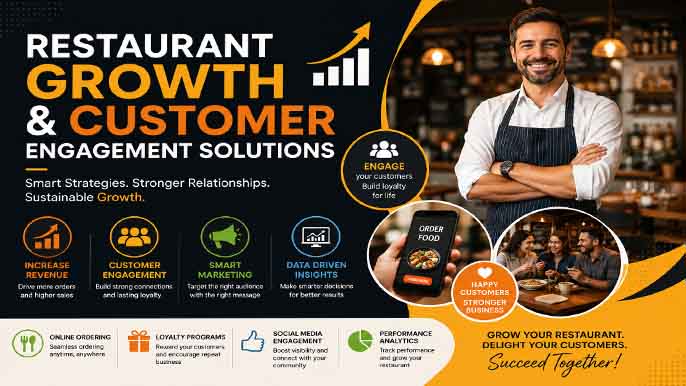
Restaurant Growth and Customer Engagement Solutions
Introduction
The restaurant industry has evolved dramatically over the past decade, driven by changing consumer expectations, digital transformation, and increased competition. Modern customers expect convenience, personalized experiences, seamless online ordering, fast delivery, and meaningful engagement with their favorite dining establishments. As a result, restaurant owners must adopt innovative strategies that not only attract new customers but also encourage repeat visits and long-term loyalty. Restaurant growth and customer engagement solutions provide businesses with the tools, technologies, and marketing strategies necessary to thrive in today’s competitive marketplace.
Successful restaurants understand that growth is not solely about increasing sales. Sustainable growth requires building strong relationships with customers, understanding their preferences, and delivering exceptional experiences at every interaction. Whether operating a local café, fine dining establishment, fast-food chain, or cloud kitchen, restaurants that invest in customer engagement strategies position themselves for long-term success and profitability.
The integration of digital technologies has opened new opportunities for restaurants to connect with customers in meaningful ways. From online ordering systems and loyalty programs to social media marketing and customer analytics, modern restaurant growth solutions help businesses improve visibility, increase customer retention, and maximize revenue potential.
Understanding the Modern Restaurant Landscape
Consumer behavior has changed significantly in recent years. Customers increasingly rely on digital channels to discover restaurants, browse menus, place orders, read reviews, and interact with brands. This shift has created both opportunities and challenges for restaurant businesses.
Restaurants that embrace digital transformation can reach larger audiences and create more personalized customer experiences. At the same time, increasing competition means that businesses must continuously innovate to stand out in crowded markets. Customer expectations continue to rise, making service quality, convenience, and engagement more important than ever before.
Restaurant growth solutions address these challenges by combining technology, marketing, and customer relationship management strategies. These solutions help businesses attract new customers while strengthening relationships with existing patrons. By understanding customer behavior and preferences, restaurants can develop targeted strategies that improve satisfaction and encourage repeat business.
Building Strong Customer Relationships
Customer engagement is the foundation of long-term restaurant success. Engaged customers are more likely to visit frequently, spend more money, recommend the restaurant to others, and remain loyal even when competitors enter the market. Building strong relationships requires consistent communication, personalized experiences, and genuine attention to customer needs.
Restaurants can enhance engagement by creating memorable dining experiences that extend beyond the meal itself. Personalized recommendations, exclusive offers, loyalty rewards, and responsive customer service all contribute to stronger connections with customers. Every interaction presents an opportunity to reinforce brand value and build trust.
Modern engagement platforms allow restaurants to collect valuable customer insights, enabling more effective communication and service personalization. Understanding customer preferences helps businesses deliver relevant promotions and tailored experiences that resonate with their target audiences.
An effective strategy often includes the keyword advanced restaurant customer retention and loyalty marketing solutions within broader digital marketing initiatives. This approach reflects the growing importance of retaining existing customers while maximizing lifetime customer value.
The Power of Digital Ordering Systems
Online ordering has become an essential component of restaurant operations. Customers appreciate the convenience of browsing menus, customizing orders, and completing transactions from their smartphones or computers. Restaurants that offer seamless digital ordering experiences often achieve higher customer satisfaction and increased sales.
Professional ordering systems streamline operations by reducing manual errors and improving efficiency. These platforms integrate with restaurant management systems, enabling businesses to process orders quickly and accurately. Customers benefit from faster service, while restaurants gain access to valuable data that can inform future business decisions.
Digital ordering solutions also create opportunities for upselling and cross-selling. Personalized recommendations and promotional offers encourage customers to add additional items to their orders, increasing average transaction values. Over time, these incremental gains contribute significantly to overall revenue growth.
The convenience provided by online ordering strengthens customer relationships and enhances the overall dining experience, making it an important component of modern restaurant growth strategies.
Leveraging Data for Smarter Business Decisions
Data-driven decision-making has become a critical factor in restaurant success. Every customer interaction generates valuable information that can help businesses improve operations, marketing effectiveness, and customer satisfaction. Restaurant growth solutions provide access to analytics tools that transform raw data into actionable insights.
Businesses can analyze customer purchasing patterns, peak ordering times, popular menu items, and demographic information to make informed decisions. These insights help restaurants optimize menus, improve inventory management, and create more targeted marketing campaigns.
Understanding customer behavior also enables more effective engagement strategies. Restaurants can identify loyal customers, recognize at-risk patrons, and develop personalized communication plans that encourage continued interaction. This level of precision helps maximize marketing return on investment while improving customer experiences.
Many successful businesses incorporate data driven restaurant growth and customer experience optimization strategies into their operations to achieve measurable improvements in performance and profitability.
Social Media and Community Engagement
Social media platforms have become powerful tools for restaurant marketing and customer engagement. Customers actively share dining experiences, post reviews, and interact with restaurant content online. This creates valuable opportunities for businesses to build brand awareness and strengthen customer relationships.
Effective social media engagement involves more than simply posting promotional content. Restaurants should focus on creating authentic, engaging experiences that encourage interaction and community participation. High-quality food photography, behind-the-scenes content, customer stories, and interactive campaigns can significantly increase engagement levels.
Responding promptly to comments, reviews, and messages demonstrates commitment to customer satisfaction and helps build trust. Positive online interactions contribute to stronger brand perception and encourage customers to remain connected with the restaurant.
Community engagement also extends beyond digital platforms. Supporting local events, collaborating with influencers, and participating in community initiatives help restaurants establish meaningful connections with customers while enhancing brand visibility.
Personalization as a Competitive Advantage
Personalization has become one of the most effective methods for improving customer engagement. Modern consumers expect businesses to understand their preferences and deliver relevant experiences. Restaurants that successfully personalize interactions often enjoy higher customer satisfaction and stronger loyalty.
Personalized marketing campaigns can include customized offers, birthday rewards, menu recommendations, and exclusive promotions based on customer behavior. These initiatives demonstrate appreciation for customers while encouraging repeat visits and increased spending.
Technology plays a significant role in enabling personalization. Customer relationship management systems and advanced analytics tools help restaurants collect and analyze customer data, allowing for more precise targeting and communication.
Personalization not only improves customer experiences but also differentiates restaurants from competitors. Businesses that consistently deliver relevant and meaningful interactions create stronger emotional connections with their customers.
Loyalty Programs and Customer Retention
Acquiring new customers is important, but retaining existing customers is often more cost-effective and profitable. Loyalty programs provide restaurants with a structured method for rewarding repeat customers and encouraging ongoing engagement.
Successful loyalty programs offer meaningful incentives that align with customer preferences. These rewards may include discounts, free menu items, exclusive access to promotions, or special event invitations. By recognizing and rewarding loyalty, restaurants create positive experiences that encourage repeat business.
Customer retention strategies should focus on delivering value beyond discounts alone. Exceptional service, consistent quality, personalized communication, and memorable experiences all contribute to long-term loyalty. Restaurants that prioritize customer retention often achieve greater stability and profitability than those focused solely on customer acquisition.
An increasingly valuable approach involves implementing integrated restaurant marketing automation and customer engagement platforms that combine loyalty management, communication tools, and performance analytics into a unified solution.
Enhancing Brand Visibility and Market Presence
Restaurant growth depends heavily on visibility and brand recognition. Customers cannot choose a restaurant if they are unaware of its existence. Growth solutions therefore include comprehensive marketing strategies designed to increase awareness and attract new customers.
Search engine optimization, local business listings, content marketing, online advertising, and influencer partnerships all contribute to stronger brand visibility. Restaurants that maintain active digital presences often attract larger audiences and generate more consistent customer traffic.
Brand consistency is equally important. Customers should experience the same quality, messaging, and visual identity across all touchpoints. Consistent branding builds trust and helps customers recognize and remember the restaurant more easily.
Marketing efforts should align with customer preferences and business objectives to maximize effectiveness. Strategic planning ensures that resources are allocated efficiently and that campaigns generate measurable results.
Technology and Operational Efficiency
Operational efficiency directly impacts customer satisfaction and business performance. Restaurant growth solutions often include technologies that streamline workflows, reduce costs, and improve service quality. Efficient operations enable staff to focus more on customer experiences and less on administrative tasks.
Automation tools can simplify order management, inventory tracking, scheduling, and customer communication. These technologies reduce errors while improving consistency and productivity. As a result, restaurants can serve customers more effectively and respond more quickly to changing demands.
Technology also supports scalability. As restaurants grow, operational systems must adapt to accommodate increased demand. Flexible solutions help businesses expand without sacrificing quality or customer satisfaction.
Investing in operational efficiency creates a strong foundation for sustainable growth and long-term success.
Future Trends in Restaurant Growth and Engagement
The future of restaurant growth will be shaped by technological innovation, changing customer expectations, and evolving market conditions. Artificial intelligence, predictive analytics, contactless experiences, and enhanced personalization are expected to play increasingly important roles in restaurant operations.
Customers will continue seeking convenience, speed, and personalized interactions. Restaurants that embrace emerging technologies and adapt to changing preferences will be better positioned to compete successfully. Innovation should remain a continuous process rather than a one-time initiative.
Future-focused businesses recognize the importance of staying informed about industry developments and investing in solutions that support long-term adaptability. Continuous improvement enables restaurants to remain relevant and responsive in a rapidly changing marketplace.
Conclusion
Restaurant growth and customer engagement solutions provide the tools and strategies necessary for achieving sustainable success in today's competitive food service industry. By combining digital technologies, personalized experiences, loyalty programs, data analytics, and effective marketing initiatives, restaurants can attract new customers while strengthening relationships with existing ones.
Success depends on understanding customer needs, delivering exceptional experiences, and continuously adapting to changing market conditions. Businesses that invest in comprehensive growth and engagement solutions position themselves for increased visibility, stronger customer loyalty, improved operational efficiency, and long-term profitability.
As the restaurant industry continues to evolve, customer engagement will remain a key driver of success. Restaurants that prioritize meaningful relationships, leverage technology effectively, and focus on delivering consistent value will be well-equipped to thrive in the modern dining landscape and achieve lasting business growth.
Add a Comment
Categories
- Authentic Mughlai Restaurants 1
- Best Biryani in Pakistan 13
- Cafes for Coffee 6
- Desi Breakfast 2
- Dining Experiences & Lifestyle 6
- Family-Friendly Restaurants 5
- Food Culture & Community 6
- Food Trends & Tips 5
- Hidden Gem Restaurants 2
- Pakistan Restaurants 8
- Pakistani Cuisine 5
- Rooftop Restaurants 2
- Street Food In Karachi 1
- Top Restaurants in Lahore 7
- Vegan and Vegetarian 1
