

Customer-Focused Food Ordering and Delivery Platform
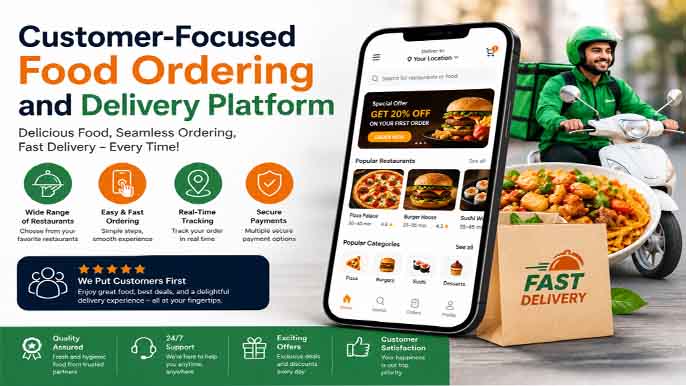
Customer-Focused Food Ordering and Delivery Platform
Introduction
The food industry has experienced a remarkable transformation over the past decade. The rapid advancement of technology, changing consumer preferences, and the growing demand for convenience have significantly influenced the way people order and enjoy food. Today, customers expect quick access to their favorite meals, seamless ordering experiences, and reliable delivery services that meet their expectations. As a result, customer-focused food ordering and delivery platforms have become an essential part of the modern food service ecosystem.
A customer-focused food ordering and delivery platform is designed to prioritize the needs, preferences, and convenience of customers while connecting them with restaurants, cafes, cloud kitchens, and food service providers. These platforms streamline the entire ordering process, from menu browsing and order placement to payment processing and delivery tracking. By focusing on user experience and customer satisfaction, food ordering platforms create value for both consumers and businesses.
In an increasingly competitive marketplace, food businesses must adopt innovative solutions that enhance customer engagement and improve operational efficiency. A customer-focused approach enables businesses to build trust, encourage repeat orders, and establish long-term relationships with customers. As digital food ordering continues to grow worldwide, businesses that invest in customer-centric platforms are better positioned to succeed in the evolving food industry.
The Evolution of Food Ordering and Delivery Services
Food ordering has evolved dramatically from traditional phone-based ordering systems to sophisticated digital platforms. In the past, customers had limited options and often relied on printed menus or direct communication with restaurants. The introduction of online ordering platforms changed the landscape by providing customers with instant access to a wide range of dining options.
Modern food delivery platforms offer advanced features such as mobile applications, real-time tracking, secure payment systems, personalized recommendations, and customer reviews. These innovations have made the ordering process more convenient and transparent, allowing customers to make informed decisions and enjoy a better overall experience.
The rise of smartphones and mobile internet has further accelerated the adoption of food ordering services. Customers can now place orders from virtually anywhere, making convenience one of the primary drivers of industry growth. This shift has encouraged businesses to embrace digital transformation and invest in technologies that support customer-focused experiences.
Understanding a Customer-Focused Food Ordering Platform
A customer-focused food ordering platform is built around the principle of delivering exceptional user experiences. Every aspect of the platform is designed to make ordering food simple, efficient, and enjoyable. This includes intuitive interfaces, personalized recommendations, responsive customer support, and seamless payment options.
The primary goal of a customer-focused platform is to remove obstacles that might discourage users from completing their orders. By simplifying navigation, reducing wait times, and providing accurate information, these platforms create positive interactions that encourage customer loyalty.
In addition to serving customers, these platforms also benefit restaurants and food businesses by increasing visibility, improving operational efficiency, and expanding market reach. Through advanced technology and customer-centric strategies, food ordering platforms help businesses meet evolving consumer demands while driving growth and profitability.
The Importance of Customer Experience in Food Delivery
Customer experience plays a critical role in the success of any food ordering platform. Consumers have countless options available, and even minor inconveniences can influence their decisions. A positive customer experience can lead to repeat business, positive reviews, and valuable word-of-mouth recommendations.
The ordering process should be straightforward and user-friendly. Customers should be able to browse menus, customize orders, and complete transactions without confusion or frustration. Fast loading speeds, clear navigation, and responsive design contribute significantly to user satisfaction.
Delivery experience is equally important. Customers expect accurate delivery estimates, real-time tracking, and timely service. When businesses consistently meet these expectations, they build trust and strengthen customer relationships. A customer-focused platform ensures that every interaction contributes positively to the overall experience.
Technology Driving Modern Food Ordering Solutions
Technology is at the heart of modern food ordering and delivery platforms. Advanced software solutions enable businesses to manage orders efficiently while providing customers with seamless digital experiences. Mobile applications, cloud-based systems, and artificial intelligence have become integral components of successful food ordering ecosystems.
Professional Online Food Ordering and Delivery Solutions streamline operations and enhance customer satisfaction. These solutions integrate ordering, payment processing, inventory management, and delivery coordination into a single platform. By automating key processes, businesses can reduce errors, improve efficiency, and provide faster service.
Artificial intelligence is also transforming the industry by offering personalized recommendations based on customer preferences and order history. This level of customization improves engagement and encourages customers to explore new menu options, increasing overall sales opportunities.
Benefits for Restaurants and Food Businesses
Customer-focused food ordering platforms provide numerous advantages for restaurants and food service providers. One of the most significant benefits is increased visibility. Digital platforms expose businesses to larger audiences and help attract new customers who may not have discovered them otherwise.
Online ordering systems also improve operational efficiency by reducing manual tasks and minimizing communication errors. Automated order management allows restaurant staff to focus more on food preparation and customer service, leading to better overall performance.
Another key benefit is data collection and analysis. Food ordering platforms generate valuable insights into customer behavior, preferences, and purchasing patterns. Businesses can use this information to optimize menus, develop marketing campaigns, and improve customer retention strategies.
Building Brand Loyalty Through Customer-Centric Strategies
Brand loyalty is essential for long-term business success. Customer-focused food ordering platforms help businesses build loyalty by consistently delivering positive experiences and addressing customer needs effectively. Personalized communication, rewards programs, and exclusive offers encourage repeat orders and strengthen customer relationships.
Premium Restaurant Marketing and Brand Growth Services help businesses connect with customers more effectively. These services combine digital marketing, customer engagement, and brand-building techniques to create memorable experiences and increase customer retention.
When customers feel valued and appreciated, they are more likely to remain loyal to a brand and recommend it to others. This loyalty contributes to sustainable growth and enhances the overall reputation of the business.
The Role of Mobile Applications in Food Delivery
Mobile applications have become one of the most important components of modern food ordering platforms. They provide customers with convenient access to restaurants, menus, promotions, and delivery services directly from their smartphones.
A well-designed mobile application offers intuitive navigation, secure payment options, and real-time order tracking. Push notifications can keep customers informed about promotions, order updates, and loyalty rewards, enhancing engagement and encouraging repeat business.
Mobile technology also enables businesses to gather valuable customer insights that can be used to improve services and develop more effective marketing strategies. As smartphone usage continues to increase, mobile applications will remain central to the success of food delivery platforms.
Enhancing Operational Efficiency Through Digital Solutions
Operational efficiency is critical for food businesses operating in competitive markets. Customer-focused platforms streamline workflows by automating tasks such as order processing, payment management, and delivery coordination. This reduces administrative burdens and allows businesses to focus on delivering quality food and service.
Complete Digital Food Business Management Platform technologies help businesses manage multiple aspects of their operations from a centralized system. These platforms support inventory tracking, customer relationship management, reporting, analytics, and performance monitoring.
By integrating various functions into a single platform, businesses can improve productivity, reduce costs, and respond more effectively to changing market conditions. Digital solutions provide the flexibility and scalability needed to support long-term growth.
The Impact of Real-Time Tracking and Transparency
Transparency is a major factor influencing customer satisfaction. Real-time order tracking allows customers to monitor the progress of their deliveries and receive accurate updates regarding estimated arrival times. This visibility reduces uncertainty and enhances trust in the platform.
Customers appreciate knowing exactly when their food will arrive. Real-time tracking also helps businesses manage expectations and respond quickly to potential delays or issues. Improved communication creates a more positive customer experience and strengthens brand credibility.
Transparency extends beyond delivery tracking. Clear pricing, detailed menu information, customer reviews, and secure payment systems all contribute to a trustworthy and user-friendly platform.
Future Trends in Food Ordering and Delivery Platforms
The future of food ordering and delivery platforms will be shaped by continued technological innovation and changing consumer expectations. Artificial intelligence, machine learning, and predictive analytics will play increasingly important roles in personalizing customer experiences and optimizing business operations.
Voice ordering, smart device integration, and automated customer support systems are expected to become more common as technology evolves. Sustainability initiatives, including eco-friendly packaging and optimized delivery routes, will also gain importance as consumers become more environmentally conscious.
Cloud kitchens and virtual restaurants are likely to expand further, creating new opportunities for digital food ordering platforms. Businesses that embrace innovation and prioritize customer satisfaction will be best positioned to thrive in this rapidly evolving industry.
Conclusion
A customer-focused food ordering and delivery platform is more than just a technology solution. It is a comprehensive system designed to enhance convenience, improve customer experiences, and support business growth. By prioritizing user satisfaction and leveraging advanced digital technologies, these platforms create value for customers, restaurants, and food service providers alike.
From seamless ordering experiences and personalized recommendations to efficient operations and real-time tracking, customer-focused platforms address the evolving needs of modern consumers. As the food industry continues to embrace digital transformation, businesses that invest in customer-centric solutions will gain a competitive advantage and build stronger relationships with their audiences.
The future of food ordering lies in innovation, convenience, and exceptional customer experiences. Organizations that adopt these principles will be well-positioned to succeed in the dynamic and rapidly growing digital food marketplace.
Frequently Asked Questions (FAQs)
What is a customer-focused food ordering and delivery platform?
A customer-focused food ordering and delivery platform is a digital system designed to provide convenient, efficient, and user-friendly food ordering experiences while prioritizing customer satisfaction.
How do food ordering platforms benefit customers?
They offer convenience, real-time tracking, secure payments, menu browsing, personalized recommendations, and easy access to a variety of restaurants and food providers.
Why is customer experience important in food delivery?
A positive customer experience encourages repeat orders, strengthens brand loyalty, improves customer retention, and enhances overall business performance.
What technologies are used in food ordering platforms?
Common technologies include mobile applications, cloud-based systems, artificial intelligence, real-time tracking tools, analytics platforms, and secure payment gateways.
How do restaurants benefit from online ordering systems?
Restaurants gain increased visibility, improved operational efficiency, better customer engagement, valuable data insights, and higher sales opportunities.
What is real-time order tracking?
Real-time order tracking allows customers to monitor the status and location of their food deliveries from preparation to arrival.
How do personalized recommendations improve customer experiences?
Personalized recommendations suggest menu items based on customer preferences and previous orders, making the ordering process more relevant and engaging.
What role do mobile apps play in food delivery services?
Mobile apps provide convenient access to menus, ordering systems, promotions, loyalty programs, payment options, and delivery tracking features.
How can food businesses build customer loyalty?
Businesses can build loyalty through excellent service, rewards programs, personalized communication, exclusive offers, and consistent customer-focused experiences.
What is the future of food ordering and delivery platforms?
The future includes artificial intelligence, voice ordering, predictive analytics, sustainability initiatives, cloud kitchens, and increasingly personalized customer experiences.
Add a Comment
Categories
- Authentic Mughlai Restaurants 1
- Best Biryani in Pakistan 13
- Cafes for Coffee 6
- Desi Breakfast 2
- Dining Experiences & Lifestyle 6
- Family-Friendly Restaurants 5
- Food Culture & Community 6
- Food Trends & Tips 5
- Hidden Gem Restaurants 2
- Pakistan Restaurants 8
- Pakistani Cuisine 5
- Rooftop Restaurants 2
- Street Food In Karachi 1
- Top Restaurants in Lahore 7
- Vegan and Vegetarian 1
